
shop now
book classes
Master the Markets
shop now
book classes

Mathson Mathew
Forex Mentor • Published: 14 March 2026 • 4 min read
Last updated: 17 September 2026
Profile LinkTrading often attracts people with the promise of financial freedom, flexible work, and quick profits. However, many enter the market without fully understanding what trading actually involves. For someone completely new, trading can appear confusing, risky, and overwhelming. Learning how trading works, what to focus on first, and how skills develop over time helps beginners avoid costly mistakes and build a realistic mindset from the start.
Trading is not a shortcut to easy money. It is a skill that develops through learning, practice, and discipline. New traders often assume that trading is about guessing price movements or following tips. In reality, trading is about decision-making under uncertainty, risk control, and consistency. Every professional trader was once a beginner. The difference between those who succeed and those who fail lies in how they approach the learning process. Understanding the basics, avoiding early mistakes, and respecting the learning curve helps new traders build a strong foundation.
Trading is the process of buying and selling financial instruments such as stocks, currencies, commodities, or cryptocurrencies with the aim of making a profit from price movements. Unlike investing, which focuses on long-term value, trading often involves shorter time frames. Traders analyze market behavior, price trends, and patterns to decide when to enter and exit positions. At its core, trading is about probability, not certainty.
A beginner should not start by searching for complex strategies or advanced indicators. The first focus should be understanding how markets move.
Learning basic concepts such as trends, support and resistance, price action, and market structure is essential. Understanding why prices move helps traders make logical decisions instead of emotional ones. Equally important is learning how losses occur and why they are a normal part of trading.
One of the biggest mistakes beginners make is focusing only on profits. In trading, controlling losses is more important than making gains. New traders should understand risk management early. This includes knowing how much capital to risk per trade and why protecting capital matters. Without this knowledge, even a few trades can cause significant losses. Risk awareness separates gambling from professional trading.
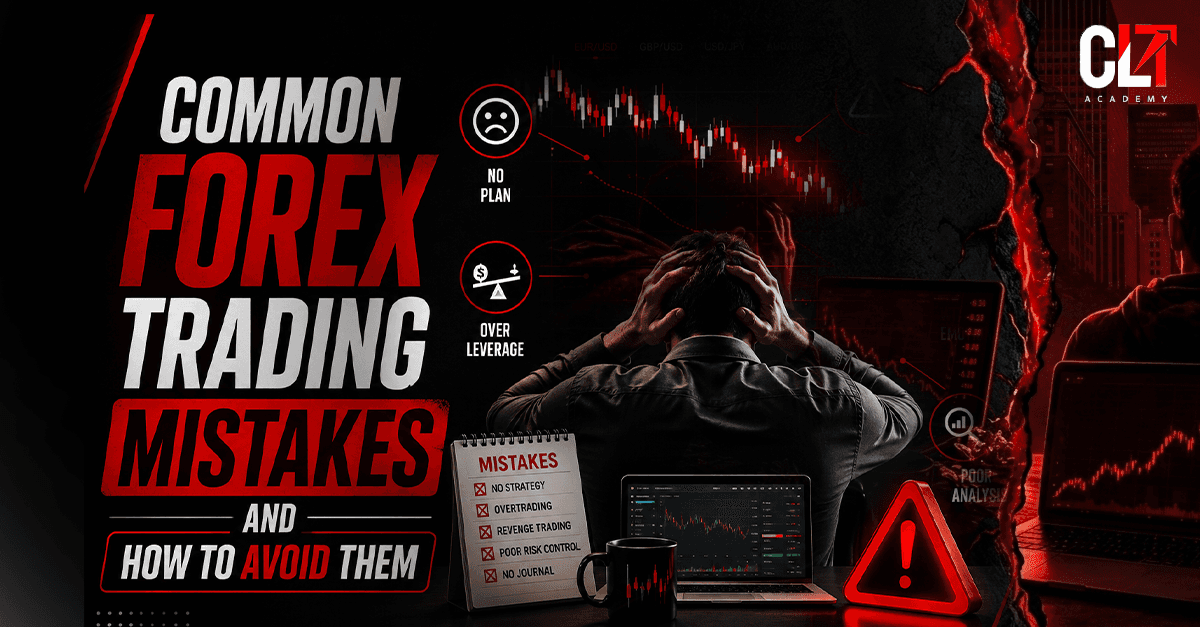
Many beginners enter trades without a clear plan. Trading without rules often leads to emotional decisions and inconsistency. Another common mistake is overtrading. New traders tend to trade frequently, believing more trades increase profit chances. In reality, this often results in losses and burnout.
Ignoring stop losses, following social media tips, and trying to recover losses quickly are also frequent mistakes that slow down learning.
Trading has a steep learning curve. At the beginning, confusion and losses are common. This phase teaches traders how markets behave and how emotions affect decisions. Over time, traders start recognising patterns, improving discipline, and reducing impulsive actions. Experience plays a major role in this progression. Learning from mistakes is a necessary part of becoming better. Patience during this phase is critical. Progress in trading is gradual, not instant.
Education is essential for long-term success. This includes learning technical analysis, basic fundamentals, and market psychology. Practising on demo accounts, studying charts, and reviewing trades helps beginners improve
understanding without risking real money. Keeping a trading journal helps track progress and identify mistakes. Continuous learning keeps traders adaptable in changing market conditions.
Becoming a professional trader does not happen overnight. It requires consistency, discipline, and emotional control. As traders gain experience, they develop their own trading style and rules. Professionals focus more on risk control than profit chasing. They accept losses calmly and stick to their plans.
The shift from beginner to professional happens when trading decisions become systematic rather than emotional.
Trading success depends heavily on mindset. Fear, greed, and impatience are common obstacles for beginners. A strong mindset helps traders follow rules, accept losses, and avoid impulsive actions. Developing patience and emotional awareness is as important as technical knowledge. Traders who respect the process and remain disciplined improve steadily over time.
Trading is a learning journey, not a one-time skill. For someone new, understanding what trading is and how to approach it makes a significant difference. Success comes from education, risk awareness, patience, and continuous improvement. New traders who focus on learning rather than quick profits build a strong foundation. Over time, this approach leads to better decisions, emotional control, and consistent growth. Trading rewards discipline and understanding, not shortcuts.
Trading is buying and selling financial assets to profit from price changes over time.
Yes, trading can be learned by anyone willing to study, practice, and stay disciplined.
Understanding the basics takes time, and improving skills is an ongoing process that develops with experience.
Many beginners experience losses, but learning from mistakes helps improve performance over time.
Yes, education helps traders understand markets, manage risk, and avoid common mistakes.
17 September 2026 • 11 min read

9 September 2026 • 8 min read

29 August 2026 • 9 min read
Trade Craft
4 weeks
Learn the essentials of trading — from platform basics and price patterns to risk control and market mindset — all in one high-impact, beginner-friendly course..
Profit Matrix
8 weeks
Designed for traders who know the basics but lack execution clarity, this 8-week program dives into advanced trade planning, market psychology, and strategic precision. Take the leap from potential to profitability — and build habits that last a lifetime.