
shop now
book classes
Master the Markets
shop now
book classes
Mathson Mathew
Forex Mentor • Published: 6 March 2026 • 4 min read
Last updated: 17 September 2026
Profile LinkThe volatility contraction pattern (VCP) is a lesser-discussed yet highly powerful breakout strategy used by professional traders to identify stocks or assets preparing for explosive moves. Popularized by trader Mark Minervini, this strategy focuses on tightening price ranges, decreasing volatility, and volume contraction before a high-momentum breakout. Unlike common breakout trading, VCP emphasizes structured accumulation phases and risk
compression before entry.
In financial markets, most traders focus on obvious breakout patterns such as triangles, flags, or support-resistance breaks. However, experienced market participants understand that true explosive moves often come after periods of controlled contraction. The volatility contraction pattern (VCP) is built on this principle.
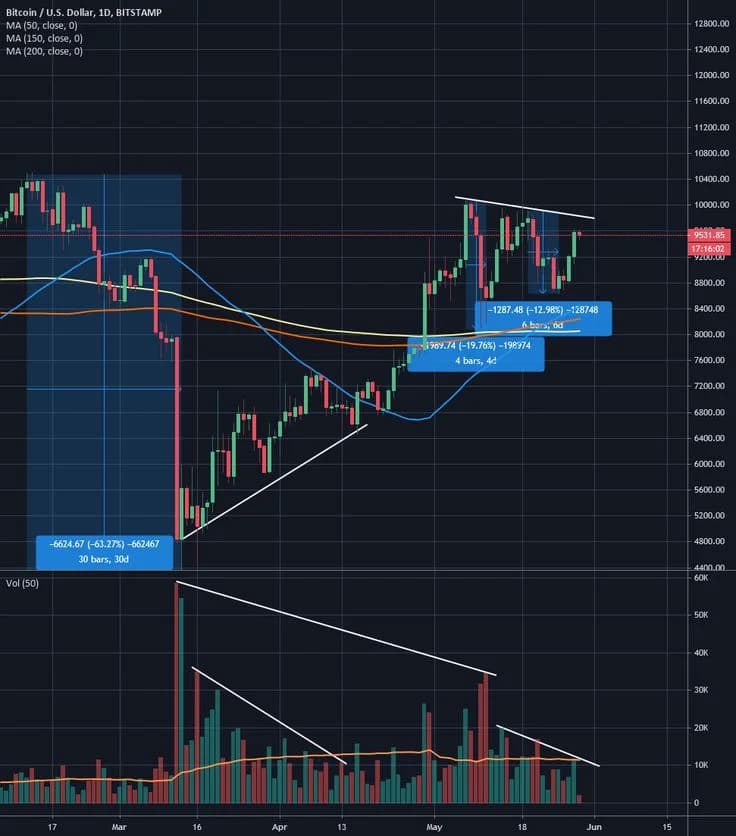
VCP identifies assets that move through a series of progressively smaller pullbacks, indicating that selling pressure is weakening while demand remains steady. This tightening structure creates a low-risk, high-reward entry opportunity just before expansion in volatility and price.
The Volatility Contraction Pattern was popularized by Mark Minervini, a U.S. investing champion known for precision breakout strategies. The concept is simple yet powerful: volatility contracts before expansion.
1. The asset forms an initial strong uptrend.
2. A pullback occurs (for example, a 20% decline).
3. A second pullback occurs but is smaller (for example, 12%).
4. A third pullback becomes even smaller (for example, 6–8%).
5. Volume declines during each contraction.
6. Price tightens near resistance.
7. Breakout occurs on strong volume expansion.
This sequence reflects diminishing supply and strong institutional accumulation.
A VCP must be preceded by a strong directional move. Without momentum, contraction has no expansion potential.
Each pullback should be smaller than the previous one. This shows sellers are losing control.
Volume reduces significantly during consolidations. This indicates reduced selling pressure.
Candlesticks become narrow and compact near resistance.
Entry is taken when price breaks above resistance with high-volume confirmation.
Markets operate on supply and demand dynamics. During contraction:
* Weak holders exit.
* Strong hands accumulate.
* Volatility compresses.
* Risk reduces for new buyers.
When supply becomes exhausted, even small demand can trigger strong upward momentum. This is why VCP breakouts often result in sharp price expansion.
One of the biggest advantages of VCP is tight risk control.
* Slightly below the last contraction low.
* Below the pivot breakout level.
Because the price range is tight, the risk percentage is small, while upside potential can be large, often delivering high reward-to-risk ratios.
1. Entering before full contraction is complete.
2. Ignoring volume behavior.
3. Trading VCP in weak market conditions.
4. Forcing the pattern where structure is unclear.
5. Ignoring broader index direction.
VCP performs best in strong market environments where institutional participation is high.
Unlike basic horizontal resistance breakouts, VCP focuses heavily on structure quality and supply absorption. Many breakout failures occur because volatility did not properly contract beforehand.
VCP reduces false breakouts by demanding clear compression before entry.
Although originally designed for equities, VCP principles apply to the following:
* Forex markets during range compression phases.
* Cryptocurrency accumulation zones before breakout rallies.
* Commodities during seasonal base formations.
However, volatility behavior differs across markets, so adaptation is required.
Trading the expansion after compression, the volatility contraction pattern is not a beginner’s strategy. It demands patience, structural analysis, and strict risk control. But when executed properly, it provides exceptional reward-to-risk setups with clear invalidation points.
In a market environment where many traders chase momentum blindly, VCP emphasizes discipline: wait for contraction before expansion. Understanding volatility behavior, supply absorption, and breakout timing can significantly elevate trading precision and long-term performance.
VCP specifically requires progressively smaller pullbacks and volume contraction, while triangles do not necessarily show declining volatility in structured phases.
Beginners can study it, but it requires chart-reading skills and patience. It is more suited for intermediate and advanced traders.
The principle of volatility contraction before expansion works across markets, but liquidity and institutional participation improve reliability.
Volume is critical. Without volume contraction and breakout expansion, the setup loses reliability.

17 March 2026 • 3 min read

17 March 2026 • 4 min read

17 March 2026 • 3 min read
Market Code
14 weeks
Designed for experienced traders seeking structured mastery, this 14-weeks program unpacks high-level chart analysis, risk-to-reward systems, and real-time strategy execution. Elevate from scattered results to strategic consistency
CLT Vantage
28 weeks
This 6-month program doesn’t just teach trading. It builds leaders capable of thinking like fund managers, mentoring others, and navigating market chaos with clarity.