
shop now
book classes
Master the Markets
shop now
book classes
Mathson Mathew
Forex Mentor • Published: 17 September 2026 • 11 min read
Last updated: 17 September 2026
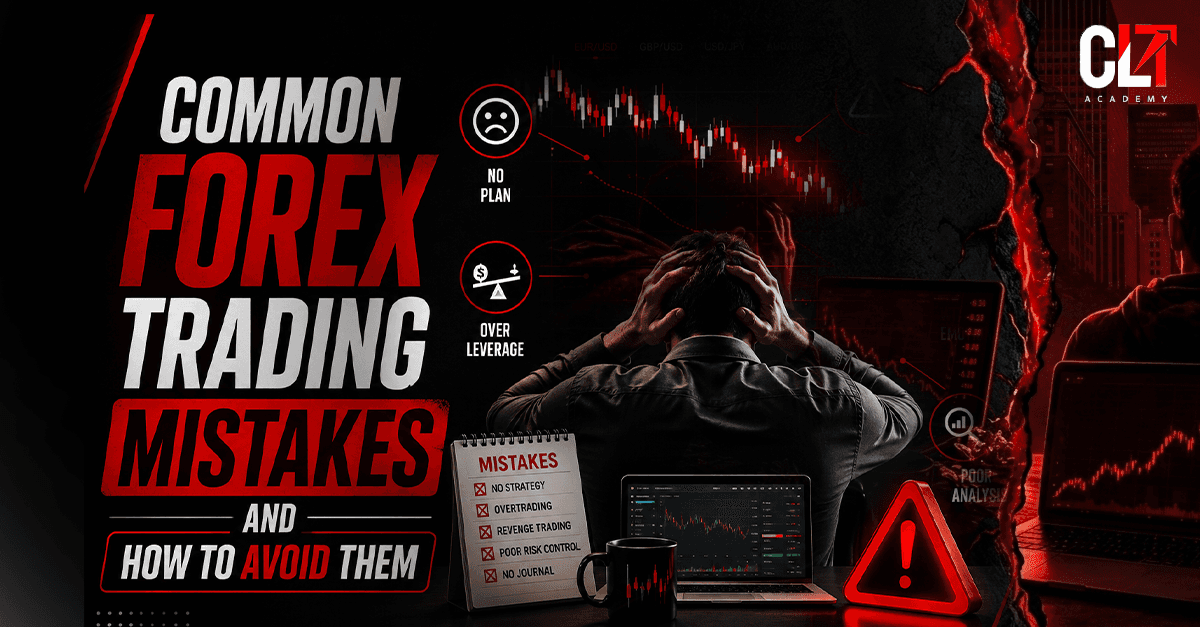
Profile LinkMost forex trading mistakes beginners make are not caused by the market itself. They usually come from skipping the basics, trading without a clear structure, taking on too much risk, or allowing emotions to influence decisions.
Forex trading may look simple at first. You choose a currency pair, decide whether you think the price will rise or fall, and place a trade. But becoming a consistent trader requires much more than simply knowing how to enter a position. Strong trading habits are built around discipline, risk management, patience, emotional control, and a repeatable process.
For beginners, understanding these common forex trading mistakes early can make a significant difference. Learning what can go wrong—and why—can help new traders protect their capital, develop better habits, and approach the market with more realistic expectations.
The hardest part of forex trading is not always finding a trade. It is learning when not to trade, understanding how much to risk, and following a plan even when the market does not move as expected.
Many beginners focus heavily on finding the perfect entry. They spend hours looking at charts, indicators, and trading strategies, but sometimes overlook the fundamentals that have a greater influence on their long-term progress. A good entry alone cannot protect a trader from poor risk management, emotional decisions, or overtrading.
That is why understanding how forex trading works for beginners is such an important first step. Before focusing on advanced strategies, new traders need to understand the market, currency pairs, leverage, position sizing, and the basic mechanics of placing and managing a trade.
The goal is not to avoid every losing trade. Losses are a normal part of trading. The real goal is to develop a process that keeps individual losses controlled and allows you to learn from your decisions over time.
Learn the right way — free consult
New traders often enter the forex market with confidence but without enough structure. They may know how to open a trading account or place an order, yet still lack a clear understanding of how to manage risk, build a trading plan, or deal with the psychological pressure that comes with real money.
This can lead to a pattern that many beginners experience: a few successful trades create confidence, confidence turns into overconfidence, and overconfidence eventually leads to larger risks or impulsive decisions.
A better approach is to learn the basics first and let consistency come before speed. Beginners should focus on understanding the market, developing a trading process, and gradually building experience instead of looking for instant results.
This is also where structured guidance can make a difference. A mentor can help a beginner identify mistakes earlier, understand why a particular decision was weak, and develop a more disciplined approach before poor habits become difficult to change.
At CLT Academy, the focus is not simply on helping learners find trades. The broader goal is to help beginners understand the process behind trading, develop confidence through learning, and build a stronger foundation before progressing further.
One of the biggest mistakes beginners make is entering trades without a written trading plan. When there are no clear rules, every decision can become a reaction to what is happening on the chart at that particular moment.
A basic trading plan should include:
A trading plan does not have to be complicated. In fact, beginners may benefit from keeping it simple. The important thing is that the rules are clear enough to guide decisions before emotions enter the picture.
Without a plan, beginners often jump into setups that look exciting but do not actually fit a defined strategy. This can create confusion, unnecessary losses, and constant second-guessing.
A student once kept changing his entries every few days because he had no structure to follow. Once he started using one simple plan and sticking to it, his trading became calmer and easier to review.
The lesson is simple: a trading plan gives every trade a reason before the trade is placed. It also makes it easier to review performance later and identify whether the problem was the strategy or the execution.
Learn the right way — free consult
Many beginners risk too much because they want faster results. They may increase their position size after a winning trade or take larger risks because they believe a bigger trade will help them reach their financial goals faster.
But bigger trades do not fix weak habits. They usually make the consequences of mistakes faster and more painful.
Good risk management habits include:
Risk management is one of the foundations of sustainable trading. A trader who understands how to manage risk in forex trading is better positioned to protect capital and remain in the market long enough to gain meaningful experience. [Risk Management Blog — Insert internal link here]
Strong trading starts with capital protection. A trader who survives long enough has more opportunities to learn, improve, and refine their approach. A trader who risks too much may lose a significant part of their account before they have enough experience to understand what went wrong.
One learner had solid chart-reading skills but kept increasing his lot size after a few winning trades. Once he reduced his risk and respected his predefined limits, his trading became much more stable.
The objective of risk management is not to eliminate losses. It is to make sure that one trade—or even a short series of losing trades—does not cause damage that is difficult to recover from.
Many beginners understand a chart setup but still struggle because of fear, greed, FOMO, or revenge trading. These emotional habits can affect even a trader who has a well-defined strategy.
Common psychology mistakes include:
Trading psychology is not a separate subject that only matters after someone becomes an experienced trader. It influences almost every decision a trader makes, from choosing whether to enter a trade to deciding when to exit.
Developing emotional discipline and understanding the psychological side of trading can help beginners recognize why they make certain decisions under pressure.
This is why psychology should be treated as part of the trading process itself. A trader may have a good strategy, but if fear causes them to exit too early or greed causes them to overtrade, the strategy may never be executed as intended.
At CLT Academy, this is often one of the areas we help beginners understand and improve. Once traders become more aware of how emotions affect their decisions, they can begin to approach their trades with greater consistency and less impulsiveness.
Learn the right way — free consult
Overtrading happens when traders take too many positions without a strong reason for doing so. Some beginners believe that because the forex market is open for long hours, they should always be looking for an opportunity.
But the availability of the market does not mean there is always a good trade available.
Signs of overtrading include:
A better approach is to focus on quality rather than quantity. A trader does not need to participate in every market movement. Sometimes, the best decision is to wait.
A mentor once worked with a student who believed every candle needed a trade. After we reduced the number of setups and focused only on quality signals, his approach became more disciplined.
The key lesson is that being in the market is not the same as being productive. Patience is also a trading skill.
Some beginners avoid stop-losses because they do not want to accept a loss. They may believe the market will eventually reverse and allow them to exit at breakeven or profit.
But trading without a predefined exit for an invalidated trade can expose an account to unnecessary risk.
Stop-losses can help:
Beginners sometimes move their stop-loss farther away when a trade moves against them. While there may be legitimate strategy-based reasons for adjusting a stop, moving it simply to avoid accepting a loss can turn a manageable mistake into a much larger one.
One learner used to remove stop-losses because he believed the market would eventually come back. Once he started treating his predefined risk limit as a non-negotiable part of his trading process, his losses became easier to manage.
A stop-loss does not guarantee that every trade will close at the exact planned price, particularly during periods of high volatility or market gaps. However, having a clear risk-management plan is an important part of responsible trading.
A lot of beginners enter forex trading expecting to make money quickly. Social media, online advertisements, and stories of successful traders can sometimes create unrealistic expectations about how fast trading results can develop.
This mindset can create pressure. When traders feel they need to make money quickly, they may take risks that do not fit their strategy or account size.
Quick-profit thinking often causes:
The market does not reward impatience simply because a trader wants faster results. Building trading skill takes time, practice, observation, and honest review.
Beginners who focus on developing a repeatable process instead of chasing quick profits are more likely to build realistic expectations and better habits over time.
The goal should not be to ask, "How quickly can I make money?" A better question is, "How can I become a more disciplined trader?"
A trading journal helps beginners understand what is working, what is not, and where mistakes are repeatedly happening. Without one, traders may remember their wins clearly while forgetting the decisions that caused their losses.
A useful trading journal can include:
Journaling turns trading experience into usable feedback. Instead of simply experiencing a loss, the trader can examine why the loss happened and whether it was a normal outcome of the strategy or the result of a poor decision.
For example, a student once noticed through journaling that most of his bad trades happened when he was mentally tired. That insight alone helped him change his trading routine and become more consistent.
A journal is not just a record of profit and loss. It can become a mirror that shows a trader's habits over time.
Beginners also make several other mistakes that can quietly affect their trading performance. These errors may not always appear as obvious as a large financial loss, but they can gradually weaken discipline and consistency.
Some common examples include:
Market timing can also influence how a trader approaches different currency pairs and trading sessions. Understanding when the forex market is active and how market sessions can affect liquidity and volatility can help beginners make more informed decisions about when to trade and when to stay on the sidelines.
Forex Trading Sessions Best Times To Trade From Dubai
These mistakes often connect with each other. A trader who lacks patience may overtrade, ignore risk management, chase the market, and enter positions because of FOMO—all during the same trading session.
The important thing is to identify these patterns early rather than allowing them to become part of a trader's routine.
The best way to avoid common forex trading mistakes is to slow down and build strong habits before trying to accelerate results.
Beginners should learn the fundamentals, understand how the market works, practice with a demo account where appropriate, manage risk carefully, and review their decisions honestly.
A simple path looks like this:
It is also important to understand that demo trading and live trading can feel very different. When real money is involved, emotions can become much stronger. That is why developing psychological discipline and risk-management habits before taking larger positions can be valuable for beginners.
A mentor-led structure can also help. The right guidance does not remove the need for personal responsibility, but it can give beginners a clearer learning path and help them identify mistakes sooner.
At CLT Academy, the focus is on supporting learners with structured guidance, practical learning, and a stronger foundation before they move deeper into live trading. The goal is to help traders understand not only what they are doing, but also why they are doing it.
Learn the right way — free consult
The most common forex trading mistakes beginners make usually come from poor structure, weak discipline, emotional pressure, unrealistic expectations, and inadequate risk management.
The good news is that these mistakes can be reduced with the right habits.
A beginner who learns to create a trading plan, protect capital, manage risk, understand trading psychology, wait for quality setups, and review performance is already building a stronger foundation for long-term development.
Forex trading is not about being right on every trade. It is about developing a process that allows you to manage uncertainty, learn from experience, and make decisions with discipline.
That is the real lesson behind avoiding common forex trading mistakes: success in trading does not begin with finding the perfect trade. It begins with learning how to manage yourself and your risk when the market does not behave as expected.
FAQ
1. What is the biggest forex trading mistake beginners make?
One of the biggest mistakes is trading without a clear plan while risking too much on individual trades. Without defined rules, beginners may make emotional decisions that can quickly affect their trading performance.
2. Why do beginners keep losing in forex?
Beginners may struggle because of emotional trading, weak risk management, overtrading, unrealistic expectations, excessive leverage, or a lack of understanding of the market. In many cases, the problem is not one single mistake but a combination of several poor habits.
3. Can these mistakes really be avoided?
Many common mistakes can be reduced through proper education, a clear trading plan, disciplined risk management, journaling, and greater awareness of trading psychology. However, no approach can eliminate losses entirely, because losses are a normal part of trading.
References

9 September 2026 • 8 min read

29 August 2026 • 9 min read
20 August 2026 • 10 min read
Trade Craft
4 weeks
Learn the essentials of trading — from platform basics and price patterns to risk control and market mindset — all in one high-impact, beginner-friendly course..
Profit Matrix
8 weeks
Designed for traders who know the basics but lack execution clarity, this 8-week program dives into advanced trade planning, market psychology, and strategic precision. Take the leap from potential to profitability — and build habits that last a lifetime.